Our Approach
The Sequential Model
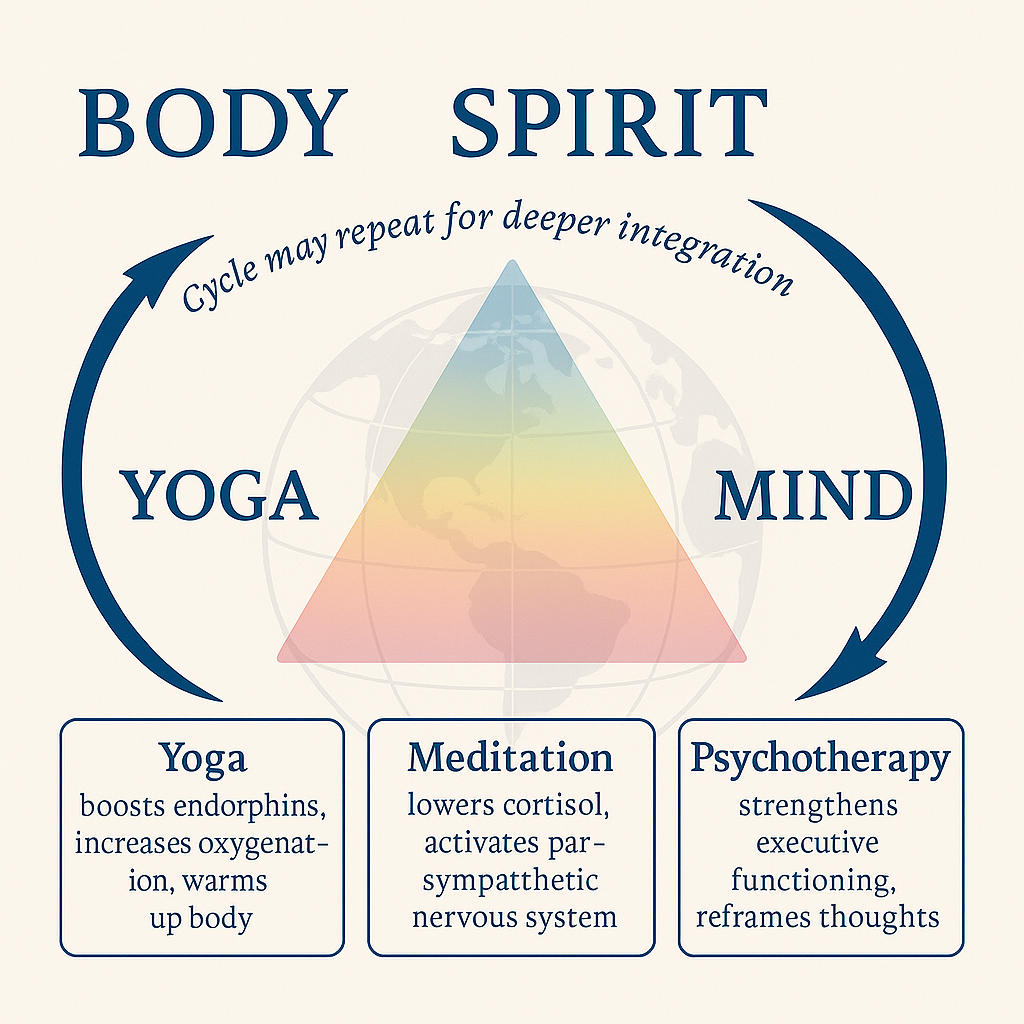
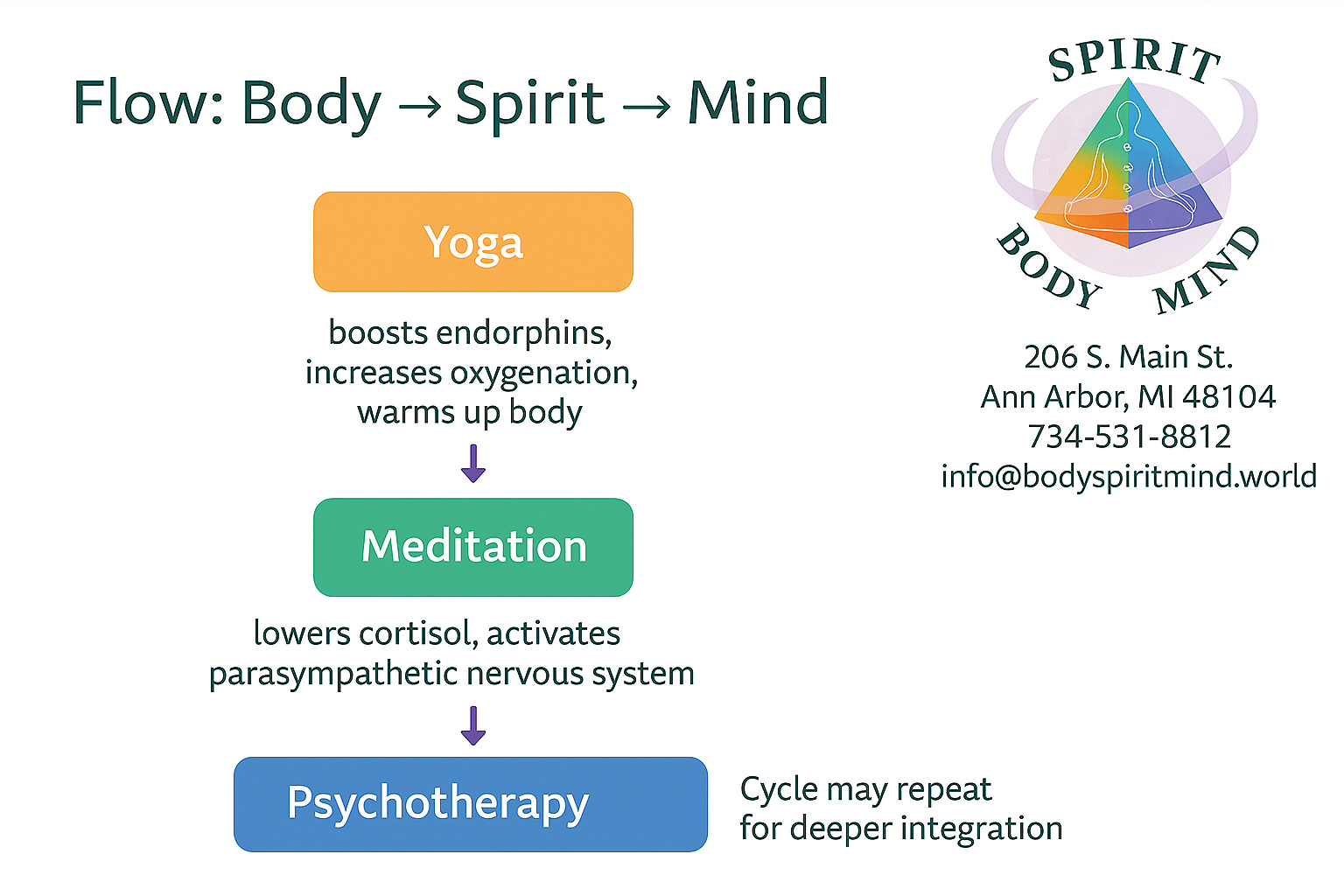
We guide clients through a repeatable flow that engages body, calms mind, and integrates insight:
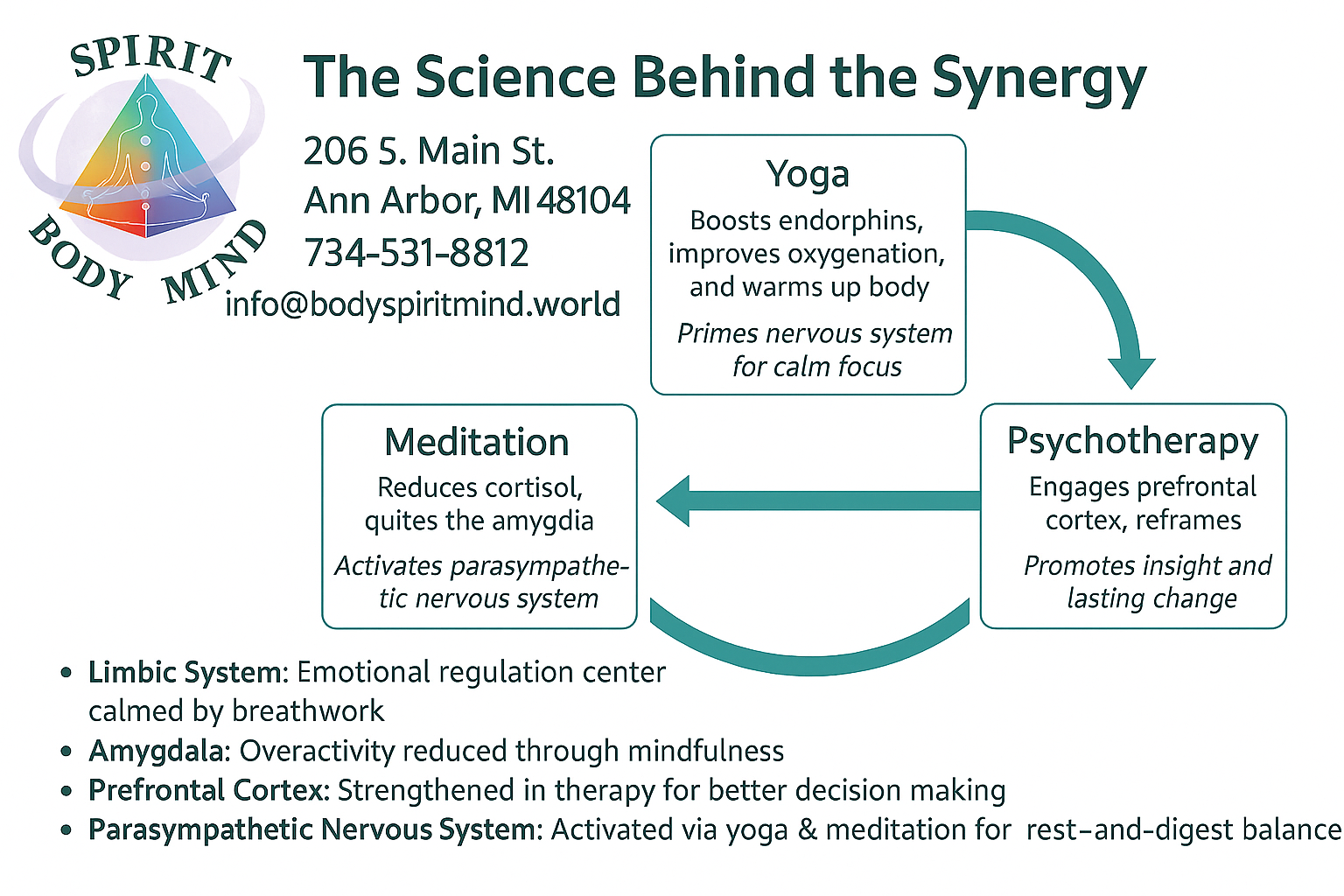
- Yoga – boosts endorphins, improves oxygenation, warms the body; primes the nervous system for calm focus.
- Meditation – reduces cortisol, quiets the amygdala; activates the parasympathetic system.
- Psychotherapy – engages the prefrontal cortex, reframes thoughts; promotes insight and lasting change.
The Body • Spirit • Mind Model
We help people feel safe enough to heal.
Body • Spirit • Mind is a trauma-informed framework that brings together mindful movement, meditation, and psychotherapy. The order is intentional. We start by noticing what’s happening in the body, make room to reflect, then use what we notice to understand patterns and practice new ways of responding.
Body
Begin with gentle movement, breath awareness, and grounding. Notice signals like tension or restlessness and explore what helps you feel more steady.
Spirit
Make space for stillness and reflection. Mindfulness and self-compassion help you notice feelings, reconnect with your values, and consider what matters to you.
Mind
In psychotherapy, explore how past experiences shape present-day beliefs and relationships. Practice putting new insights into action in everyday life.
Explore the 12 Modules
The modules build from grounding and self-awareness toward relationships, identity, and lasting habits. Each offers a way to connect what you notice in a session with what happens in daily life.
Safety & Grounding
Identify what helps you feel more present and build a set of grounding tools you can return to when things feel overwhelming.
Nervous System Regulation
Recognize how stress shows up for you, from feeling keyed up to shutting down, and explore ways to respond.
Inner Parts & Dissociation
Get curious about different sides of yourself and notice when feeling disconnected may be a response to stress.
Core Beliefs
Explore how earlier experiences shaped what you believe about yourself, and consider which beliefs still serve you.
Communication & Boundaries
Practice listening, checking for understanding, expressing needs clearly, and setting boundaries you can maintain.
Trauma, Healing & Transformation
Understand your story and reclaim your sense of self by exploring how past experiences shape present-day patterns, at a pace that respects your readiness.
Attachment & the Inner Child
Explore how early relationships influence closeness, trust, and conflict, and respond to old needs with greater compassion.
Self-Care, Sleep & Stress
Build realistic routines that make space for rest, help you notice stress earlier, and support day-to-day well-being.
Shame & Self-Compassion
Distinguish between taking responsibility for a choice and judging yourself as a person. Practice a kinder, more accountable response.
Identity Reconstruction
Separate who you are from the roles you learned to play. Use your strengths and values to guide what you choose next.
Creativity & Meaning
Use creative expression to explore experiences that may be hard to put into words and reconnect with what gives your life meaning.
Integration & Relapse Prevention
Bring your skills into a plan for daily life, with early warning signs, support people, and steps to take when old patterns return. In substance-use care, this includes relapse prevention.
The Science Behind the Synergy
Limbic System
Breathwork and mindful movement calm emotional reactivity.
Amygdala
Mindfulness decreases overactivity and improves threat discrimination.
Prefrontal Cortex
Therapy strengthens regulation, perspective, and decision-making.
Parasympathetic Nervous System
Activated through yoga and meditation to restore rest-and-digest balance.